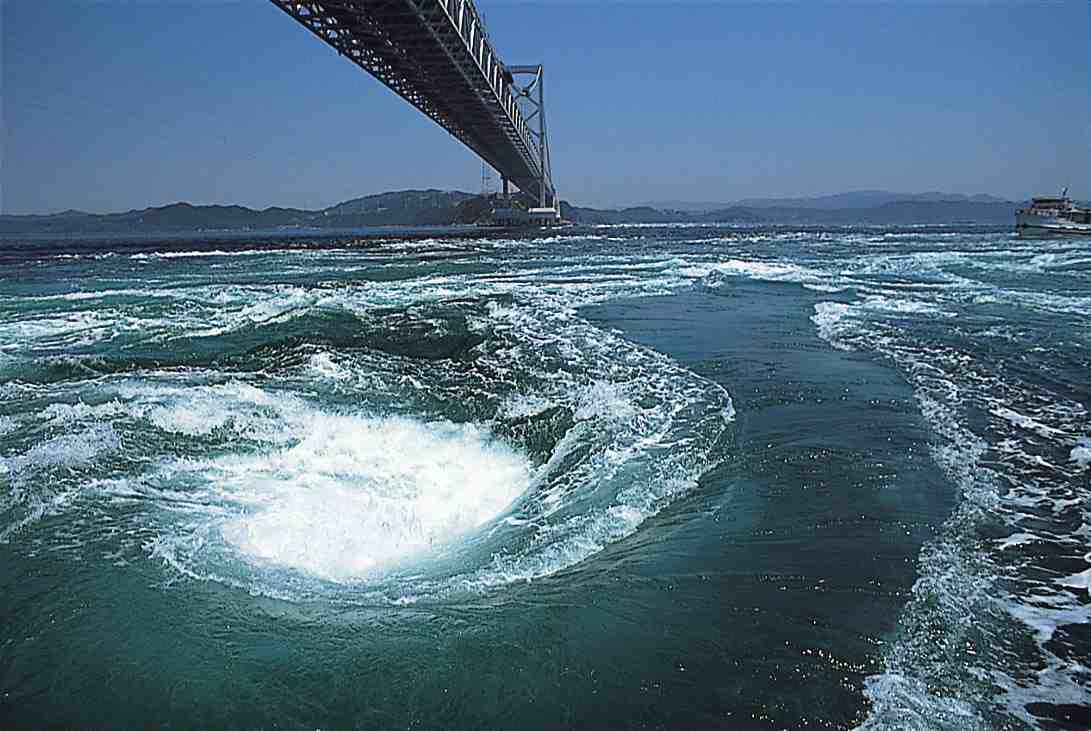
NARUTO, Tokushima Prefecture--A famous whirlpool in the Naruto Strait drew crowds of sightseers Sunday as relatively calm conditions and strong tides created a huge vortex.
The whirlpool between Shikoku and Awajishima island in Hyogo Prefecture reached a diameter of 15 meters shortly after 2 p.m. on Sunday. During the afternoon and evening, tourist boats crowded into the narrow straight to watch the spectacle.
Uzu no Michi (road of whirlpool), a tourist center run by Tokushima Prefecture and located under the Onaruto Bridge which crosses the strait, was also packed with visitors. According to Uzu no Michi, the whirlpool will reach its peak at 3:50 p.m. on Tuesday.
News from Asahi Shimbun
Thursday, May 6, 2010
Naruto Whirlpool
Japan: Its Culture and Attractions

A geisha stands with sealed lips symbolizing a code of honor. Entertaining Japan’s male elite through music, dance, song, and conversation, geisha are valued as much for discretion as for beauty. The famed icons of Japanese culture have practiced their gei, or art, for over 250 years.
Geisha
A brilliantly decorated lantern float stands out against the summer night sky during the Neputa Festival in Hirosaki. Often depicting warriors and shaped like fans, the floats are accompanied by traditional drums. Folk festivals featuring traditional music, dance, and costume are an important cultural element in Japan.
Sumo wrestlers clash in a ring in Nagoya. Once supported by the patronage of emperors, Japan’s national sport has roots going back nearly 1,500 years. Short but intense, most matches last less than a minute, with the grandly attired gyoji serving as referee.
Paper lanterns decorated with script glow orange in Japan. The Japanese language commonly uses 15,000 kanji characters, which are borrowed from Chinese. Schoolchildren as young as seven must confront the language’s complexities, such as learning to write some of the 200-plus characters for the sound “shou.”
Rice cakes, or mochi, are a favorite in Japan, particularly during the New Year, when they are traditionally given as gifts, set out decoratively in the home, or offered at shrines and temples. Their surfaces dusted with flour, the sticky, glutinous cakes are often stuffed with sweet beans or served in soup and, when not made by hand in a complex process, are widely available in supermarkets.
Photos are from National Geographic.
Japan: Its Culture and Attractions

Soaring bamboo stalks dwarf visitors to Arashiyama Park in western Kyoto. Known for its vertiginous growth, bamboo has numerous uses in Japan, particularly in Kyoto, where it is made into baskets, flutes, pipes, benches, dolls, garden fences, and artifacts for tea ceremonies.
Kyoto
Kinkakuji
Outside Shibuya Station in Tokyo, a crowd of pedestrians crosses a busy intersection beneath the glare of lighted billboards and neon signs. Japan’s capital is the planet's largest urbanized area, with some 36 million people.
Shibuya
Snowcapped Mount Fuji casts a bright spot on the frozen surface of Lake Yamanaka. The 12,388-foot (3,776-meter) volcano, which last erupted almost 300 years ago, is for the Japanese an enduring national symbol of serenity and strength. On a clear day, the iconic peak can be seen from Tokyo, 70 miles (112 kilometers) away.
Mt. Fuji
Standing at low tide, the torii on Miyajima is thrown into silhouette as the sun sinks behind a mountain. The famous vermilion gate was built in 1875 and is the largest in Japan, standing about 53 feet (16 meters) high. Torii are traditionally built as entrances to Shinto shrines.
Miyajima
Pictures are from National Geographic
Saturday, April 24, 2010
ShinJon, Pyonkichi, and Shinkun
Shinkun is my first regular kid student. He is fascinated with anything about frogs, including Keroru, with Naruto, and Fairy Tail (Yes, manga can be a good literature especially if you're studying Japanese culture). Shinkun and I started from scratch. He makes me proud for improving a lot nowadays whereas he could barely utter a single English word before.
Shinkun rocks!

Yesterday, he said they bought a frog's house. I thought it was a joke. But it seems he caught two tadpoles in the park's puddle and decided to make them as pets. The name of the first is Pyonkichi. I asked him the name of the second one, and he said, "JONA." Hahaha! I laughed so hard. We decided to give it a name "ShinJon." A combination of our names. Hahaha. How could he distinguish Pyonkichi from ShinJon? Tadpoles look alike. Hahahaha
Where are Pyonkichi and ShinJon? <
Where are they? 

Here he is: Shinkun aka the Jake in my iTalk existence with his antics in my class.
Shinkun having fun stuffing his nose with tissue paper. I did this too while having our class. Hahaha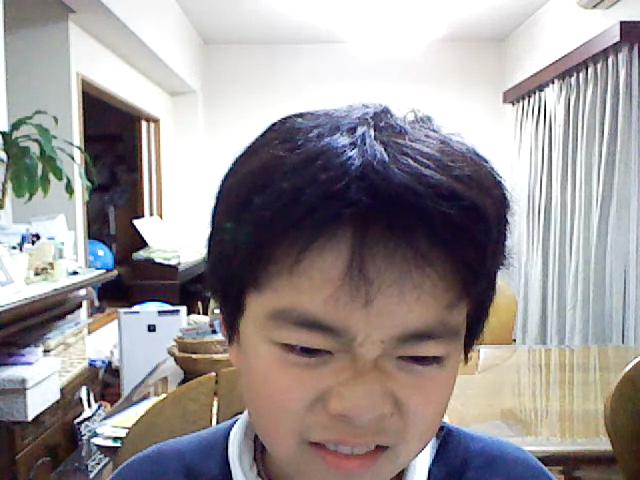
Angry Shinkun. We had a Facial Expression class. We practiced basic facial expressions such as "happy," "sad," "tired," and "sick."
Monday, April 19, 2010


Subscribe to:
Posts (Atom)


