MAEBASHI —The municipal government of Isesaki in central Japan on Wednesday banned male employees from wearing beards, citing concerns that citizens find beards unpleasant and the need for public servants to maintain decorum.

The government of the Gunma Prefecture city said it has received complaints from some citizens who were offended by city office employees who had come to work unshaven following a holiday, and that it has instructed the employees concerned to shave each time a complaint was filed. But it is the first time that the city has put the ban, which carries no penalties, in writing.
The Internal Affairs and Communications Ministry said it believes Isesaki is the country’s first municipality to introduce such a policy.

The ban was introduced in step with the start of this year’s ‘‘Cool Biz’’ casual attire campaign for the summer months for city government employees. The campaign, which is aimed at cutting back on air-conditioner use by allowing government and company employees to work without jackets and neckties, has been practiced in Japan since 2005 under the initiative of the Environment Ministry.
‘‘Some citizens find bearded men unpleasant, so beards are banned,’’ a city government in-house notice says.
Although public opinion has become more tolerant of beards, ‘‘public servants should look like public servants,’’ a city official said.
But an official at the Environment Ministry said it is ‘‘hard to say’’ whether beards have anything to do with maintaining decorum.

Minoru Fujii, a member of the Hige (beard) Club, a Tokyo-based organization to promote beards that consists mostly of barbers, said, ‘‘I’m designing beards for my customers based on the concept of ‘a beard acceptable in the office.’ In the case of public servants, maybe the ban can’t be helped.’’
from Japan Today
Wednesday, May 19, 2010
Banning Male Employees from Having Beards
Thursday, May 13, 2010
In Japan, the Children Are Buying Bugs
While American children are buying Japanese action figures, Japanese children are buying bugs. That’s one lesson to be drawn from Jessica Oreck’s documentary “Beetle Queen Conquers Tokyo,” a guided tour of a national predilection that introduces us to insect stores, insect fairs, insect video games, insect vending machines and insect viewing areas.
Ms. Oreck, a filmmaker-botanist double threat, ventures into the woods with a professional beetle hunter (whose career has paid for a Ferrari) and observes children playing with prehistoric-looking bugs as big as their hands. She also visits shrines and festivals featuring traditional dance and music, part of her attempt to tie Japan’s unusual love of insects into its aesthetic affinities for transient beauty and communion with nature. This entails a somewhat stilted narration that introduces us, as if for the first time, to things like haiku and The Tale of Genji.
Punctuated by images of crowded cityscapes, slowly moving trains, neon-lighted streets and green hillsides — backgrounds familiar from Japanese art-house films and serious anime — the diverting “Beetle Queen,” like “Lost in Translation” or Takashi Murakami’s art, says less about Japan than it does about America’s continuing fascination with modern Japanese culture. A scientist looking for a combination of childlike innocence and minimalist sophistication might not see it in Hello Kitty but can recognize it in a horned beetle.
From the New York Times
Sunday, May 9, 2010
Cebu: The Queen of the South

Located in the wealthy residential suburb of Beverly Hills about 6 km north of downtown Cebu is an enormous Taoist Temple. It was built by Cebu's substantial Chinese community (the Chinese make up about 15% of Cebu's population).
The temple is the a center of worship for Taoism, the religion which follows the teachings of the ancient Chinese philosopher, Lao Tze. You can see Taoist devotees following their rituals on Wednesdays and Sundays, as they climb the 99 steps of the temple to light joss sticks and have their fortunes read by the monks.
Built in 1972, the Taoist Temple is constructed in a highly ornate and, some would say, gaudy style of Chinese architecture, and is topped with a pagoda-style roof.
The temple has an elevation of 300 meters above sea level, and if you climb the 99 steps to the entrance, you will be rewarded with a good view of Cebu City and in the distance Mactan and Bohol islands. Nice sunset views too.
Bantayan Island is an island in the Philippines located at the western portion of the northern tip of Cebu Island, Philippines 
Malapascua Island is situated in the Visayan Sea, located across a shallow strait from the northernmost tip of Cebu Island. 
Osmena Peak is known to be the highest peak in the province and Island of Cebu. Base on actual GPS altitude, it stand approximately 1000 meters above sea level. Osmena peak is located in the vicinity area of Mantalungon, (a town that is around 700 to 800 meters and probably one of the highest towns in Cebu. Mantalungon has been known as the vegetable kingdom of Cebu. Its really unusual finding this town where you feel it was like an area in the Cordilleras were they have their trading post for vegetable dealers and townfolks and children are wearing jackets at high noon. 
Its towering facade blends Muslim, Romanesque, and neo-classical architecture, this church of the Señor Santo Niño de Cebu–which translates literally as “holy child of Cebu.”
Cebu’s oldest Roman Catholic Church, the Basilica Minore del Santo Niño, also still retains the original stone texture and natural color it had in 1735. (Click on photo to view larger image.)
The structure, located right in the heart of downtown Cebu City, is way, way older–it is the Philippines’s oldest church, but it was made out of hard wood, mud, and nipa when it was first built by the Spaniards in 1566 on the very spot where the image of the Santo Niño, left behind by Portuguese and Spanish explorers in 1521, was found preserved in a burned wooden box.
Picture Sources:
Kawasan Waterfalls
Bantayan Island
Malapascua
Osmeña Peak
Basilica del Sto. Niño
Nihon Sankei—the Three Most Scenic Spots in Japan
Japan is island nation of unique beauty, but three locations are traditionally accepted as being the three most scenic spots of Japan. We may ask, how were these places selected? During Japan's Edo period(1600-1867) a Confucian scholar, Shunsai Hayashi, wrote a book based on his experiences as he traveled throughout Japan on foot. In his book, Nihon Kokujisekikou (Observations About the Remains of Japan's Civil Affairs), he bestowed his unqualified praise on the three locations in Japan he thought offered travelers the most scenic beauty in the nation. 
The scenic masterpieces of Matsushima, Amanohashidate, and Miyajima are as spectacular today as they were in the Edo period. These three remarkable sites, textured by the sea and abundant greenery, have not only touched the hearts of millions of people but also have served as a colorful background to history itself. 
The exquisite beauty of these sites has inspired poets, writers, and artists to immortalize the scenic charm and awe inspiring vision of Japan. 
Japan's Meccas that everyone wants to visit at least once.
Essay from Nihon Sankei
Picture Sources:
Matsushima
Miyajima Toori
Amanohashidate- The kid bending over is a student in iTalk. He is Shinossuke. He has a bright future in translating Japanese literature into English.
Yamazaki Returns from Space Station
KENNEDY SPACE CENTER, Florida--Naoko Yamazaki and her fellow astronauts returned to Earth on Tuesday after a two-week mission to the International Space Station.
She was reunited with her husband Taichi, 37, and daughter Yuki, 7, who handed her a bouquet of roses. "It smells good, thank you," Yamazaki told her.
Yamazaki, 39, and the six other crew members blasted into space aboard the Space Shuttle Discovery on April 5.
About one hour and 40 minutes after the shuttle landed here, Yamazaki and her colleagues met with some of the people who had made the mission possible.
"Thank you to the Japanese people for cheering for me," she told a televised interview. "I'm happy to have seen and felt Earth's beautiful nature" (from space).
News from Asahi Shimbun
Two-headed Snake in Kagoshima
TANEGASHIMA, Kagoshima — A two-headed Japanese ratsnake has been found here and is currently being kept at Tanegashima Municipal Government Hall, town officials said.
The 27-centimeter long snake with heads that each extend about 2 centimeters in length was found last week in a Tanegashima man’s garden and is being temporarily cared for at the local government offices.
“I don’t know why it’s got two heads, but it’s an extremely rare find,” a spokesman from Kagoshima’s Hirakawa Zoo said.
Apparently snakes are sometimes seen as a sign of good luck in Japan, so they expect a lot of visitors looking to have their lotto tickets blessed by the snake’s two-headed super powers.
From Japan Probe
Saturday, May 8, 2010
The Importance of Reading
The Importance of Reading
It is a well-known fact that when there were no televisions or computers, reading was a primary leisure activity. People would spend hours reading books and travel to lands far away-in their minds. The only tragedy is that, with time, people have lost their skill and passion to read. There are many other exciting and thrilling options available, aside from books. And that is a shame because reading offers a productive approach to improving vocabulary and word power. It is advisable to indulge in at least half an hour of reading a day to keep abreast of the various styles of writing and new vocabulary.
It is observed that children and teenagers who love reading have comparatively higher IQs. They are more creative and do better in school and college. It is recommended that parents to inculcate the importance of reading to their children in the early years. Reading is said to significantly help in developing vocabulary, and reading aloud helps to build a strong emotional bond between parents and children. The children who start reading from an early age are observed to have good language skills, and they grasp the variances in phonics much better.
Reading helps in mental development and is known to stimulate the muscles of the eyes. Reading is an activity that involves greater levels of concentration and adds to the conversational skills of the reader. It is an indulgence that enhances the knowledge acquired, consistently. The habit of reading also helps readers to decipher new words and phrases that they come across in everyday conversations. The habit can become a healthy addiction and adds to the information available on various topics. It helps us to stay in-touch with contemporary writers as well as those from the days of yore and makes us sensitive to global issues.
by Damian Sofsian
Thursday, May 6, 2010
Naruto Whirlpool
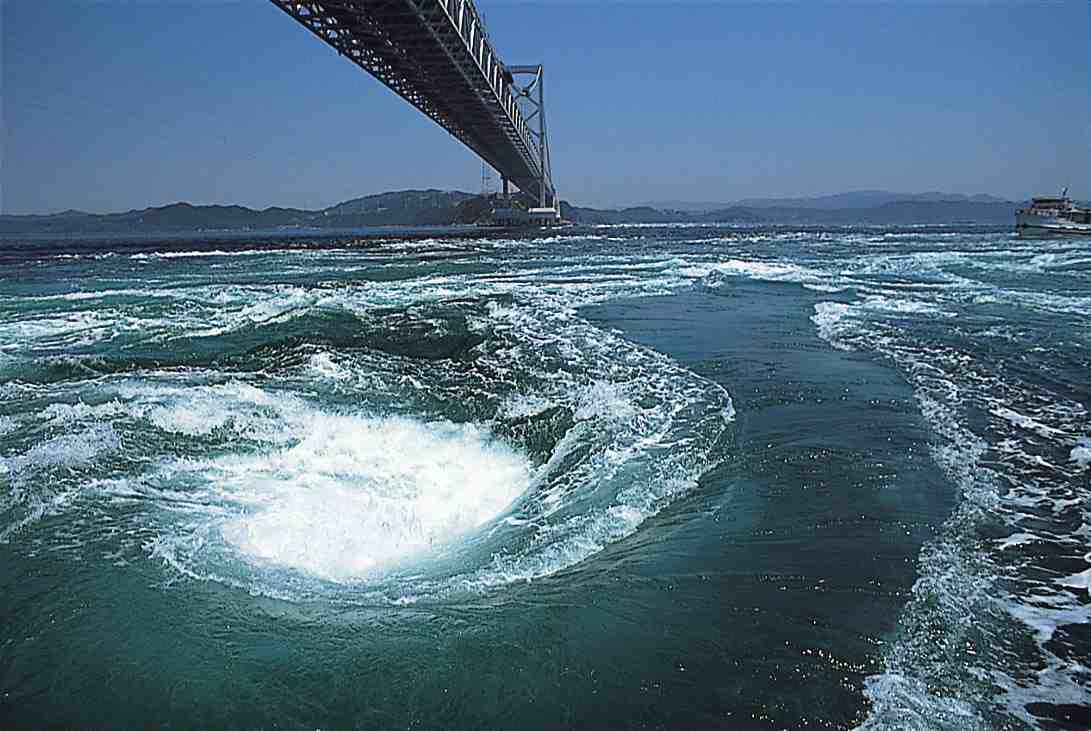
NARUTO, Tokushima Prefecture--A famous whirlpool in the Naruto Strait drew crowds of sightseers Sunday as relatively calm conditions and strong tides created a huge vortex.
The whirlpool between Shikoku and Awajishima island in Hyogo Prefecture reached a diameter of 15 meters shortly after 2 p.m. on Sunday. During the afternoon and evening, tourist boats crowded into the narrow straight to watch the spectacle.
Uzu no Michi (road of whirlpool), a tourist center run by Tokushima Prefecture and located under the Onaruto Bridge which crosses the strait, was also packed with visitors. According to Uzu no Michi, the whirlpool will reach its peak at 3:50 p.m. on Tuesday.
News from Asahi Shimbun
Japan: Its Culture and Attractions

A geisha stands with sealed lips symbolizing a code of honor. Entertaining Japan’s male elite through music, dance, song, and conversation, geisha are valued as much for discretion as for beauty. The famed icons of Japanese culture have practiced their gei, or art, for over 250 years.
Geisha
A brilliantly decorated lantern float stands out against the summer night sky during the Neputa Festival in Hirosaki. Often depicting warriors and shaped like fans, the floats are accompanied by traditional drums. Folk festivals featuring traditional music, dance, and costume are an important cultural element in Japan.
Sumo wrestlers clash in a ring in Nagoya. Once supported by the patronage of emperors, Japan’s national sport has roots going back nearly 1,500 years. Short but intense, most matches last less than a minute, with the grandly attired gyoji serving as referee.
Paper lanterns decorated with script glow orange in Japan. The Japanese language commonly uses 15,000 kanji characters, which are borrowed from Chinese. Schoolchildren as young as seven must confront the language’s complexities, such as learning to write some of the 200-plus characters for the sound “shou.”
Rice cakes, or mochi, are a favorite in Japan, particularly during the New Year, when they are traditionally given as gifts, set out decoratively in the home, or offered at shrines and temples. Their surfaces dusted with flour, the sticky, glutinous cakes are often stuffed with sweet beans or served in soup and, when not made by hand in a complex process, are widely available in supermarkets.
Photos are from National Geographic.
Japan: Its Culture and Attractions

Soaring bamboo stalks dwarf visitors to Arashiyama Park in western Kyoto. Known for its vertiginous growth, bamboo has numerous uses in Japan, particularly in Kyoto, where it is made into baskets, flutes, pipes, benches, dolls, garden fences, and artifacts for tea ceremonies.
Kyoto
Kinkakuji
Outside Shibuya Station in Tokyo, a crowd of pedestrians crosses a busy intersection beneath the glare of lighted billboards and neon signs. Japan’s capital is the planet's largest urbanized area, with some 36 million people.
Shibuya
Snowcapped Mount Fuji casts a bright spot on the frozen surface of Lake Yamanaka. The 12,388-foot (3,776-meter) volcano, which last erupted almost 300 years ago, is for the Japanese an enduring national symbol of serenity and strength. On a clear day, the iconic peak can be seen from Tokyo, 70 miles (112 kilometers) away.
Mt. Fuji
Standing at low tide, the torii on Miyajima is thrown into silhouette as the sun sinks behind a mountain. The famous vermilion gate was built in 1875 and is the largest in Japan, standing about 53 feet (16 meters) high. Torii are traditionally built as entrances to Shinto shrines.
Miyajima
Pictures are from National Geographic


